
Is Epoxy Flooring Worth It? Pros and Cons From a Local Installer
By Thousand Oaks Epoxy Floors · Updated · 5 min read
Epoxy flooring is worth it if you use your garage daily, want it easy to clean, or plan to stay in the home several years: a professionally installed flake floor costs $2,600–$4,000 for two cars in Thousand Oaks and lasts 15+ years, roughly $175–$270 a year. It is not worth it for a damp slab nobody will test, a short-term rental, or if you want a soft, warm floor underfoot.
Most people asking this have already seen a nice floor at a friend's house and want to know whether the price is justified or whether it is mostly looks. Here is our honest list, including the downsides we tell people on estimates.
What Are the Pros of Epoxy Flooring?
- Easy to clean. Oil, dirt, leaves and drywall dust sit on top instead of soaking in. A dust mop and a hose handle most of it.
- No more concrete dust. Bare concrete constantly sheds fine dust that gets tracked inside. A sealed floor stops it.
- Stain resistance. Oil drips, coolant and coffee wipe up. Bare concrete stains permanently.
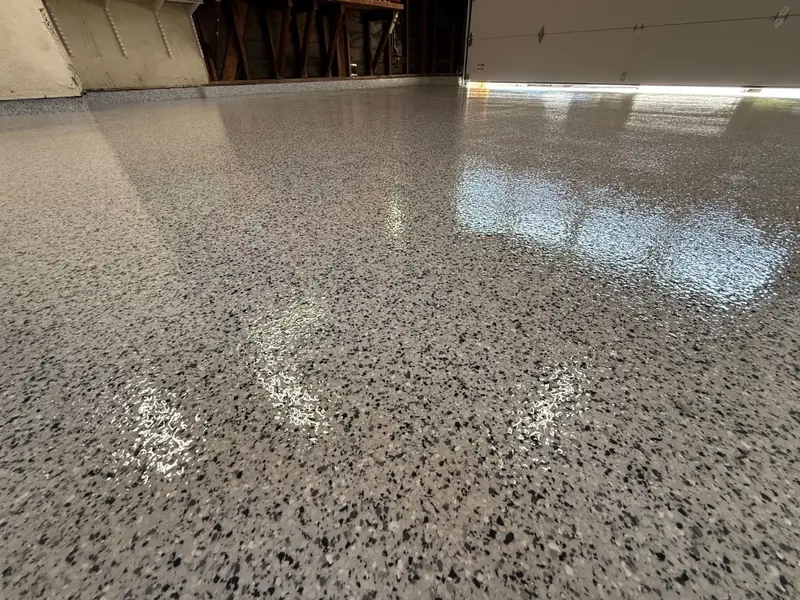
- Brighter garage. A light floor reflects light; many owners notice the garage feels twice as bright.
- Hides slab flaws. A flake broadcast covers old stains and patched cracks.
- Grip. Flake and quartz floors are textured; grit can be added to topcoats.
- Fast install. Flake is done in one day.
- Resale appeal. A clean, coated garage photographs well in listings. We will not promise a number, but buyers notice.
What Are the Cons?
- Upfront cost. $2,600 is the starting point for any project, more with prep or showroom finishes.
- Can be slippery when wet if it is a smooth gloss finish without texture or grit.
- Not soft or warm. It is still a concrete floor underneath; for a gym, use mats under weights.
- Prep is noisy and dusty, though modern dust collection keeps it inside the garage.
- Bad installs fail fast. A cheap floor that peels is worse than bare concrete because it has to be removed.
- Moisture slabs need extra work, which adds cost.
- Solid and metallic colors show dust more than flake.
Is It Worth It Financially?
Cost per year is the useful way to think about it.
| Option | Upfront (two-car) | Typical life | Approx. cost per year |
|---|---|---|---|
| Bare concrete | $0 | n/a | $0, but stains and dust |
| DIY kit | $150–$600 | 1–3 years | $100–$300 |
| Pro flake 3-layer | $2,600 | 15+ years | ~$175 or less |
| Pro flake 5-layer | $4,000 | 15+ years | ~$270 or less |
| Interlocking tiles | Varies widely | Varies | Depends on product |
Prices for our floors include grinding, repairs, materials and labor. Extra prep items, such as old coating removal, glue removal, advanced crack repair, demo, moisture mitigation or extra labor, are added when the slab needs them.
Does It Make the Garage Hotter or Colder?
No meaningful change in temperature. A light-colored floor does reflect more light, so the space feels brighter and some people notice it feels a little cooler in summer. Dark solid colors can feel warm near an open, sunny door.
Who Should Skip Epoxy?
- If you are selling within months and the buyer is likely to remodel anyway.
- If the slab has a serious, active moisture problem and you will not pay to address it.
- If the garage is going to become living space with carpet or wood.
- If you only want to hide a stain; a rug is cheaper.
Who Benefits Most?
- People who park in the garage every day.
- Home gyms, workshops and hobby garages.
- Families who track in sand from the beach or dirt from trails.
- Anyone tired of concrete dust coming into the house.
- Showroom garages, where metallic and solid finishes shine.
Is Epoxy Better Than Just Sealing the Concrete?
A clear sealer is a cheaper middle ground. Our grind and seal runs $6.50–$9 per sq ft and stops dusting and light staining while keeping the concrete look. It is thinner than a full coating and does not hide flaws. For a daily-parking garage, flake is usually the better value. Compare all the options in our coating options guide.
Is Epoxy Toxic?
Cured epoxy and polyaspartic floors are inert and safe for homes. During installation, some products have a solvent odor; we ventilate the garage and keep doors to the house closed. Once cured, there is no ongoing off-gassing to worry about in normal residential use.
Is Epoxy Flooring Waterproof?
The coating itself is waterproof on top, so spills and rainwater sit on the surface. It does not stop water coming up from beneath the slab; that is moisture vapor, and it needs a moisture-tolerant primer or barrier layer, not just a topcoat.
How Does Epoxy Compare to Garage Tiles or Paint?
Garage paint is the cheapest finish but wears through quickly under tires and is the most likely to peel. Interlocking plastic tiles go down fast, need no cure time and can be removed when you move, but they trap water and grit underneath, can shift under hot tires, and the seams collect dirt. Polished concrete is extremely durable but does not hide existing stains or cracks and is harder to get right on an older garage slab. Our full breakdown with prices is in epoxy vs tile vs polished concrete vs paint.
What We Tell People on Estimates
The most common regret we hear is not about choosing epoxy. It is about choosing the cheapest bid, then paying to remove it two years later. The second most common is choosing a very dark or very light solid color for a busy family garage and then seeing every speck of dust. If you are on the fence, a mid-tone flake blend is the floor that is hardest to regret.
We also tell people when not to do it. If a slab reads very high for moisture and the owner does not want the 5-layer build or a moisture primer, we would rather walk away than install a floor we expect to blister.
How We Would Decide
If you will be in the house at least three to five years and you use the garage, a properly installed flake floor almost always earns its cost. If either is not true, consider grind and seal or simply cleaning and sealing. Either way, get the slab looked at first. Book a free estimate or see what it costs.
Frequently Asked Questions
Is epoxy flooring worth the money?
For a garage used daily in a home you will keep several years, usually yes. A professional flake floor costs $2,600–$4,000 for two cars in Thousand Oaks and lasts 15+ years, which is a low cost per year compared with repeated DIY kits.
What are the disadvantages of epoxy flooring?
Upfront cost, possible slipperiness on smooth gloss finishes when wet, a hard surface underfoot, and the risk of peeling if prep is done poorly. Moisture-prone slabs need extra work.
Does an epoxy garage floor increase home value?
It improves how the garage looks and photographs, which buyers notice, but we do not promise a specific resale return.
Is epoxy flooring slippery?
Smooth gloss finishes can be slippery when wet. Flake and quartz floors are textured, and grit can be added to the topcoat for extra traction.